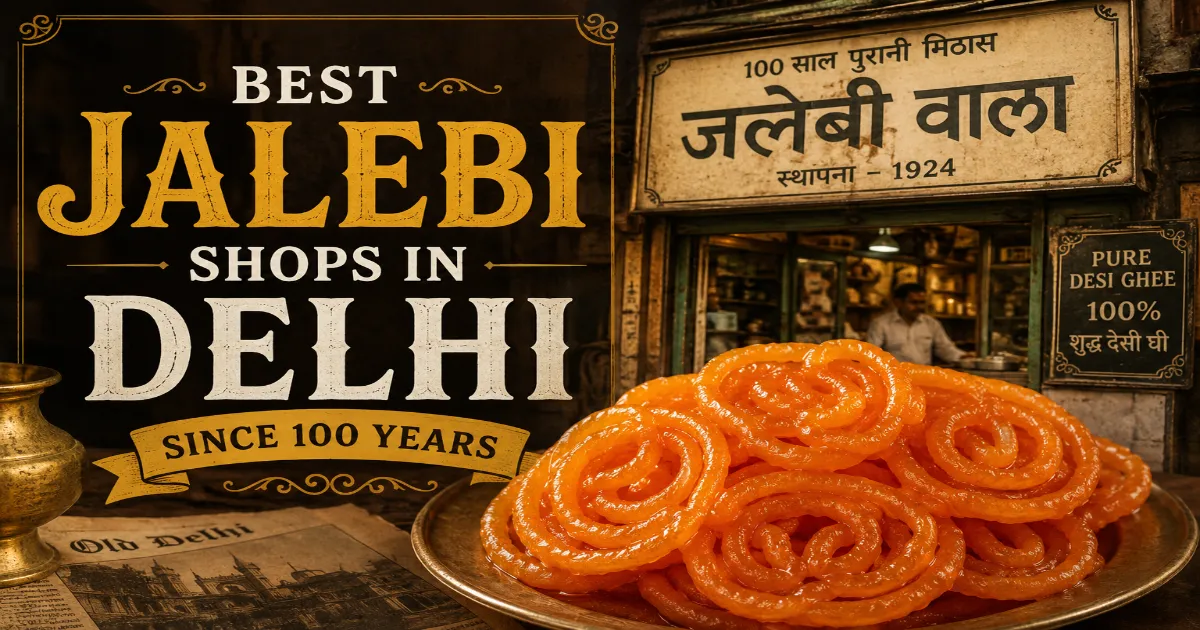
Delhi has many great foods. But jalebi is special. Crispy, syrupy, hot from the kadhai —
it is hard to beat.
Some jalebi shops in Delhi have been open for over 100 years. They use the same
recipe, the same method, and the same dedication as their founders. This guide covers
the best ones.
What Makes Delhi Jalebi So Good
Delhi jalebi is fried in pure desi ghee, not oil. This gives it a rich taste and a crispy texture that is hard to find elsewhere.
The batter is fermented overnight. This adds a slight tang that balances the sweetness perfectly.
It is best eaten fresh and hot, with rabri or kachori on the side.
Famous Jalebi Shops in Delhi That Are Over 100 Years Old
1. Old Famous Jalebi Wala – Chandni Chowk (Est. 1884)
This is the most well-known jalebi shop in Delhi. It has been open since 1884, near Dariba Kalan in Chandni Chowk.
The jalebis here are fried in pure ghee and sold fresh throughout the day. They sell out fast, so going early is a good idea.
The size, crispiness, and sweetness are the same every single time. That consistency is what makes this place legendary.
Best time to visit: early morning, with hot rabri on the side.
2. Jalebi Wala Near Fatehpuri Masjid – Old Delhi
This shop sits near the Fatehpuri Masjid at the western end of Chandni Chowk. It has been serving customers for over a century.
The jalebis here are slightly thicker and chewier. The sugar syrup has a hint of saffron, which makes them taste a little different from the rest.
Locals love having jalebi and kachori here as a Sunday morning breakfast. It is one of the best street food combos in Old Delhi.
3. Natraj Dahi Bhalla Corner – Chandni Chowk (Est. 1940s)
Natraj is mostly known for dahi bhalla, but their jalebi is also very good. It has been a Chandni Chowk favourite since the 1940s.
Jalebis are made fresh to order, so they are always hot and crispy. The fermented batter gives them a mild tangy taste that works well.
The shop is small and busy, but the experience of eating jalebi on a busy Old Delhi street is worth it.
4. Ghantewala Halwai – A Shop That Lives in Memory
Ghantewala was established in 1790. It was one of the oldest sweet shops in all of India.
It served Mughal royalty and later became a favourite for generations of Delhi families. Their jalebis were considered the best of their time.
Sadly, the shop closed in 2015 after 225+ years. But it is still remembered fondly by thousands of Delhiites and food historians.
What Makes an Authentic Jalebi
Fermented Batter
Good jalebi batter is made 12 to 24 hours in advance. The fermentation gives it a light tang and the right texture after frying. Shops that skip this step make dull jalebis.
Fried in Ghee, Not Oil
Ghee gives jalebi a richer taste, a flakier outer layer, and a better aroma. It also keeps the jalebi crispy longer. Most old shops still use pure desi ghee.
The Right Sugar Syrup
The chashni should not be too thin or too thick. It should soak into the jalebi without making it soggy. Heritage shops often add cardamom or rose water to the syrup for extra flavour.
Best Areas in Delhi for Jalebi
Old Delhi and Chandni Chowk
This is the best place to find old jalebi shops. The lanes of Khari Baoli, Dariba Kalan, and near Fatehpuri Masjid all have great options.
Many shops have large iron kadhais right at the front. Visitors can watch the jalebis being made before buying them.
Karol Bagh and Paharganj
These areas also have a few traditional halwai shops that have been around for 80 to 100 years. They may not be as famous, but the quality is solid.
South Delhi
Many halwai families moved to South Delhi in the 1940s and 1950s and started their own shops. Some of these have been running for three to four generations now.
Why Jalebi Matters in Delhi’s Culture
Jalebi is served at weddings, festivals, and religious events. It is distributed during Diwali, Holi, and Eid. It is offered at dargahs and temples.
It is a sweet that brings different communities together. Sharing a plate of jalebi with neighbours is a small but meaningful tradition in many Delhi households.
Historians also link Delhi’s jalebi tradition to the Mughal era. The recipe was adapted from Persian and Arab sweets and refined over centuries in Old Delhi’s kitchens.
Tips Before You Visit
Go Early
Visit between 7 AM and 10 AM. The first fresh batches are the best. Shops often sell out of the best jalebis by late morning.
Try a Little at Multiple Shops
Order a small portion at each shop. This way, one can compare the taste, texture, and sweetness across different places.
Visit on Weekdays
Sunday mornings are very crowded in Old Delhi. Weekdays are quieter, with shorter queues and a better chance to talk to the shop owners.
Why These Shops Have Lasted 100+ Years
Most of these shops are family-run. The recipe is passed down from parent to child. In some cases, even the utensils have been used for decades.
They do not compromise on quality. Pure ghee, quality sugar, and properly fermented batter — every time. Regular customers notice this and keep coming back.
These shops are also a part of their communities. They know their customers by name and have served the same families across generations. That bond is hard to break.
Final Thoughts
Eating jalebi at a 100-year-old shop in Delhi is not just about the taste. It is about touching a part of the city’s history.
No restaurant chain or delivery app can recreate the experience of standing in Chandni Chowk at 8 in the morning, watching fresh jalebis come out of a hot kadhai.
These shops have seen Delhi change completely around them. And yet, they are still there — same recipe, same dedication, same taste. That is something worth celebrating.
Explorer Delhi: